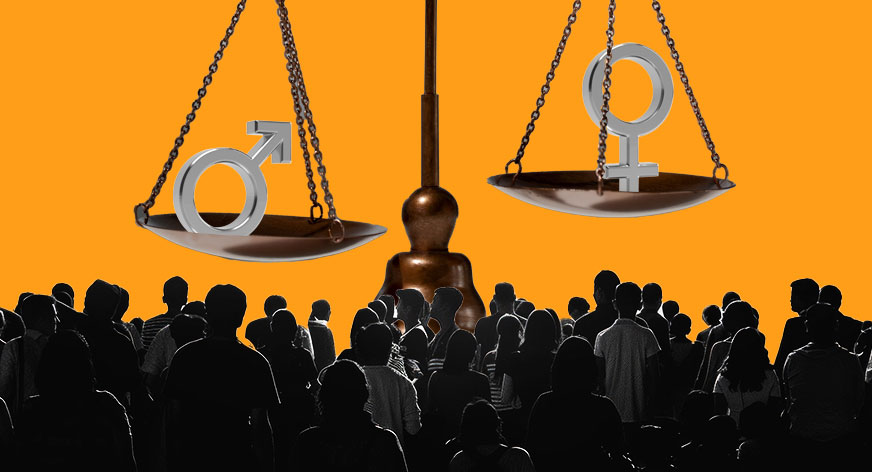


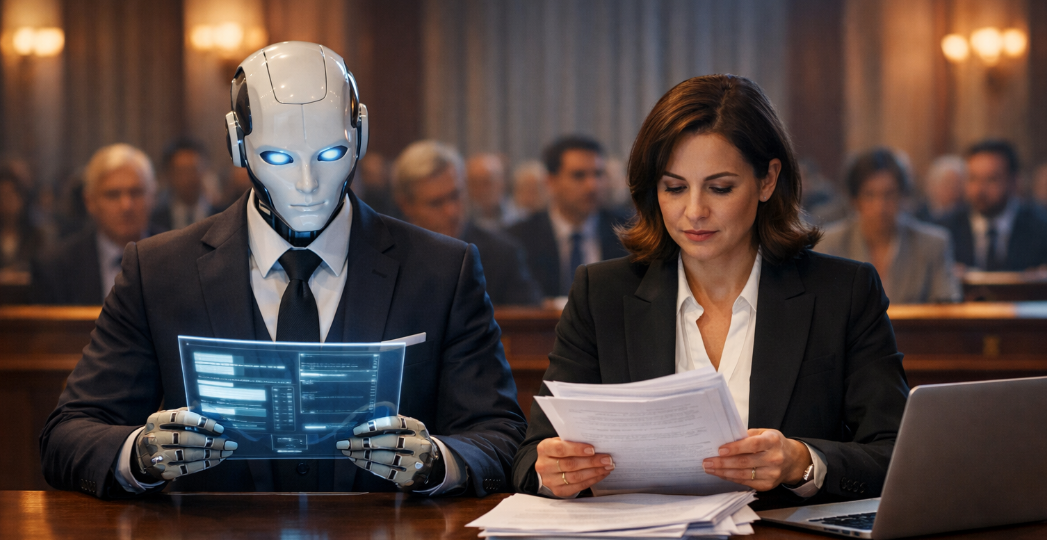
AI won’t replace lawyers. But the lawyers who use AI just might replace the ones who don’t. In the last few years, AI has gone from social media caption generator to ace contract drafter. In 2024, 79% of legal professionals reported using AI tools — up from just 19% in 2023. This shift has been quick and surprisingly seamless, to the point where legal departments are asking hard questions. Can AI deliver better outcomes? Can it reduce costs? Can it be trusted?
To be honest, the tools are getting sharper. But the work is still human.
This piece cuts through the noise and explores what AI can actually do for legal — and where it still falls short. Especially when it comes to judgment, ethics, and empathy — the three things that legal tech can never be entirely human about.
Where AI works
A global investment research estimates that roughly 44% of legal work tasks could ultimately be automated. This includes legal research, document review, and contract analysis among others. In 2025, AI is already handling the heavy lifting in some of these spaces — and doing it well.
It sifts through case law and regulations in seconds. It flags errors, predicts outcomes, and helps spot risk. For high-volume, rules-based tasks, it’s a game-changer.
The best part? It doesn’t get tired or lose focus. And doesn’t break your coffee machine.


Where it doesn’t work
Legal isn’t just logic. It’s nuance, strategy and reading the room. AI can’t weigh public perception, navigate cultural contexts, or make judgment calls under pressure. For example, a report on U.S. asylum cases found that AI was translating names as months of the year, with incorrect time frames and mixed-up pronouns, wreaking ‘havoc’ and even causing asylum applications to be wrongly denied. In fact, one translator estimated that 40% of Afghan asylum cases he saw in the U.S. had errors from machine translation.
AI is hence a powerful enabler that works best in combination with human intelligence. It can’t take responsibility for decisions that carry real-world consequences. Which means that when things get grey — ethically, emotionally, or reputationally — AI steps back. And that’s where human steps in.
The ethics equation
Then there’s trust. Algorithms reflect the data they’re trained on — which means they can also reflect bias. AI may disseminate only one side of the story, or favor one over the other, even in well-intentioned systems.
Confidentiality and compliance are a whole other issue. Because when clients hand over sensitive data, they’re not just trusting a partner’s tech stack — they’re trusting the partner.

The ideal crossover
With all of the above said and done, AI is being leveraged strategically by humans in 2025.
Lawyers in large firms and corporations are saving 1-5 hours per week using e-discovery and GenAI for litigation. In M&A, contracts are being revolutionized, with one survey pointing at 64% of AI-using in-house teams applying artificial intelligence to contract drafting, review and analysis. This has shortened deal time by weeks.
And when the team brings in an AI partner with specialised legal muscle, the time is even shortened. Alternate Legal Solutions Providers (ALSPs) come equipped with sophisticated tools and better security. They also bring lawyers and quality control attorneys whose sole job in a day is to maximise AI’s output to 100% accuracy. This, hence, is the ideal crossover between AI, human and legal.
What does it all mean?
The future belongs to those who can blend technical efficiency with ethical clarity and round it up with human insight. The ones who know when to let the machine run, and when to call the shot themselves, won’t need to worry. They’ll be too busy riding this wave.
AI isn’t coming for your job. But it will reshape it.
See how LegalEase works with AI to deliver better NDA reviews, faster
Sources:
- lawnext.com
- pwc.com
- context.news